Why Environmental Detection Is Crucial for Safe and Sustainable Oil & Gas Extraction

Environmental detection helps you minimize risks and operate responsibly in oil and gas extraction. Advanced tools, like MethaneAIR, reveal methane emissions over four times higher than EPA estimates. By using these technologies, you can track emissions accurately and meet environmental goals. Explore environmental monitoring solutions to ensure safety, sustainability, and compliance.
Key Takeaways
Environmental detection lowers dangers in oil and gas work. It finds problems early to keep workers safe and protect communities nearby.
Modern tools like smart sensors and virtual models help monitor instantly. These devices make work smoother and cut harm to nature.
Following environmental rules is very important. Using detection systems meets laws and earns trust from others involved.
Understanding Environmental Detection in Oil & Gas

What is environmental detection?
Environmental detection refers to the process of monitoring and assessing the impact of industrial activities, such as oil and gas extraction, on the surrounding environment. It involves collecting data on air, water, soil, and emissions to identify potential risks and ensure sustainable operations. By using advanced tools like sensors and monitoring systems, you can measure pollutants, detect leaks, and evaluate environmental changes in real time.
Industry experts define environmental detection as a way to quantify the effects of business activities on the environment. This process helps you manage risks, make informed decisions, and comply with environmental regulations. For example, low-cost methane sensor systems have proven essential for monitoring emissions in the oil and gas sector. These tools not only enhance detection capabilities but also make monitoring more accessible and cost-effective.
Its role in safety, sustainability, and eco-friendliness
Environmental detection plays a critical role in ensuring the safety of workers, nearby communities, and ecosystems. By identifying hazards early, you can prevent accidents, reduce exposure to harmful substances, and protect public health. A review of 63 studies highlights the health risks associated with oil extraction, including exposure to pollutants through air, soil, and water. This underscores the importance of robust detection systems in mitigating these risks.
From a sustainability perspective, environmental detection allows you to minimize the long-term impact of oil and gas operations. For instance, research on oil and gas wastewater spills reveals persistent pollution even after remediation efforts. Early detection of such issues can help you address them before they escalate, preserving natural resources and ecosystems.
Eco-friendliness is another key benefit. By using tools like low-cost air quality monitors and methane sensors, you can reduce greenhouse gas emissions and contribute to global efforts against climate change. These technologies enable you to adopt cleaner practices while meeting energy demands responsibly.
Alignment with global environmental standards
To ensure compliance, environmental detection must align with global standards set by organizations like the American Petroleum Institute (API). The API has issued nearly 700 consensus standards for the oil and gas industry, covering spill prevention, emissions control, and environmental protection. These guidelines are widely recognized and often incorporated into federal and state regulations.
Advanced tools like the SeaOWL UV-ATM sensor and the ECO V2 Fluorometer demonstrate how technology supports these standards. The ECO V2 Fluorometer, for example, was used during the Deepwater Horizon spill to detect oil plumes, showcasing its effectiveness in environmental monitoring. By adopting such technologies, you can meet regulatory requirements while enhancing operational efficiency.
Environmental detection not only helps you comply with standards but also positions your operations as environmentally responsible. This alignment builds trust with stakeholders and ensures long-term sustainability in the oil and gas sector.
Advanced Technologies in Environmental Detection
IoT and sensors for real-time monitoring
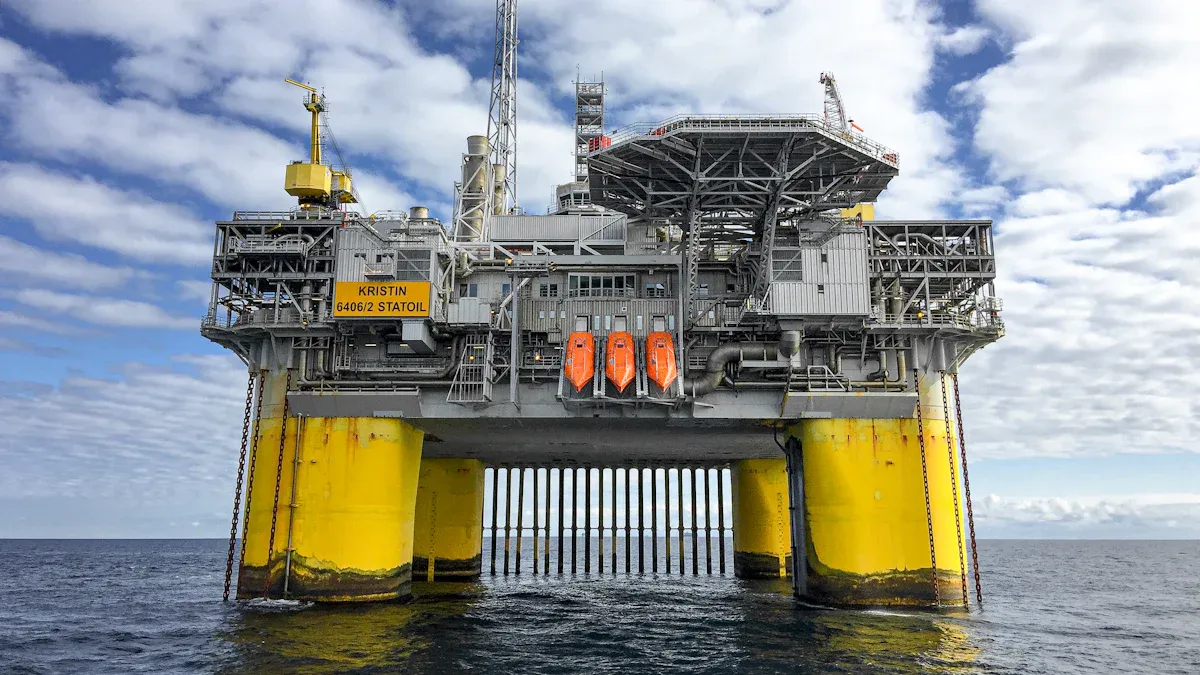
IoT and sensor technologies have revolutionized real-time monitoring in the oil and gas industry. These systems allow you to track environmental conditions and detect potential hazards instantly. For example:
Remote oil rig monitoring uses low-power wireless networks like Zigbee to connect large sensor networks.
Control room communications rely on Wi-Fi antennas for reliable data transmission.
Drones equipped with 5G networks reduce manual inspections by 75% and inspection time by 90%.
Real-time edge analytics further enhances equipment effectiveness by up to 10%, as noted in a 2022 McKinsey study. IoT gas sensors also play a critical role in safety. They detect unsafe oxygen levels in refineries and alert workers before critical situations arise. This proactive approach minimizes risks and ensures worker safety.
By 2025, IoT's economic impact could range from $3.9 trillion to $11.1 trillion, with a potential $930 billion impact in the oil and gas sector over the next decade.
AI and machine learning for predictive analytics
AI and machine learning enable you to predict and prevent environmental risks before they occur. These technologies analyze vast amounts of data to identify patterns and anomalies. For instance, AI can detect leaks in pipelines or equipment malfunctions in real time. This reduces the likelihood of accidents and environmental damage.
Predictive analytics also improves operational efficiency. By using AI-driven insights, you can optimize resource allocation and reduce downtime. For example, 5G-enabled seismic data enhances the accuracy of discovering potential reserves. This ensures that extraction processes are both efficient and environmentally responsible.
Drones and remote sensing for inaccessible areas
Drones and remote sensing technologies provide a safer and more efficient way to monitor hard-to-reach areas. They inspect large areas quickly, reducing inspection time compared to traditional methods. Drones eliminate the need for scaffolding, allowing you to inspect vertical structures like cooling towers and flare stacks. This reduces human exposure to hazardous environments.
Here’s a snapshot of drone usage in the industry:
Statistic | Value |
|---|---|
Companies using drones | 16% |
Companies intending to use drones | 74% |
Main reason for visual inspection (safety) | 98% |
Main reason for visual inspection (operational reliability) | 66% |
Main reason for visual inspection (regulatory requirements) | 29% |
Drones also offer cost advantages. They require minimal manpower and are more affordable than traditional methods like helicopter surveys. This makes the technology accessible to smaller companies, broadening its adoption across the industry.
Digital twins for operational optimization
Digital twins create virtual replicas of physical assets, enabling you to monitor and optimize operations in real time. These models integrate real-time data to provide insights into asset performance and environmental conditions. For example, digital twins facilitate anomaly detection and continuous system monitoring. This leads to significant cost savings and improved performance.
The benefits of digital twins include:
Revenue increases of up to 10%.
Time-to-market reductions by 50%.
Product quality improvements of 25%.
Maintenance cost reductions through scheduled repairs without production disruptions.
Energy consumption optimization, contributing to sustainability and lower carbon footprints.
Optimization Aspect | Benefit Description |
|---|---|
Revenue Increase | Digital twins can lead to a revenue increase of 10%. |
Time to Market Reduction | They can reduce time to market by 50%. |
Product Quality Improvement | Digital twins improve product quality by 25%. |
Maintenance Cost Reduction | They help in scheduling repairs without disrupting production, significantly cutting maintenance costs. |
Real-time Monitoring | Digital twins provide real-time data on asset and process performance, enhancing operational efficiency. |
Energy Consumption Optimization | They enable optimization of energy use, contributing to sustainability and lower carbon footprints. |
By adopting digital twins, you can achieve operational excellence while minimizing environmental impact. This technology represents a significant step toward safe and sustainable oil and gas extraction.
Benefits of Environmental Detection
Enhancing safety for workers and communities
Environmental detection significantly improves safety for workers and nearby communities. By identifying hazards such as gas leaks early, you can prevent accidents and reduce exposure to harmful substances. Gas detectors, for instance, play a crucial role in spotting leaks before they escalate. This proactive approach minimizes risks and ensures a safer working environment. Continuous monitoring also allows for immediate corrective actions, protecting both human health and the surrounding ecosystem.
Tip: Early detection not only safeguards lives but also builds trust with local communities by demonstrating a commitment to their well-being.
Reducing environmental impact through early risk detection
Early detection of risks helps you minimize the environmental footprint of oil and gas operations. Gas detectors and monitoring systems enable you to identify leaks and emissions promptly, reducing the amount of harmful substances released into the environment. Studies show that immediate corrective actions can significantly mitigate the adverse effects of gas leaks, promoting sustainability.
Key benefits of early detection include:
Reduced methane emissions, which contribute to climate change.
Preservation of natural resources by preventing contamination.
Enhanced ability to meet sustainability goals.
Improving efficiency and reducing operational costs
Environmental detection technologies streamline operations and cut costs. By integrating real-time monitoring systems, you can optimize resource allocation and reduce downtime. The financial benefits are substantial:
Description of Savings | Amount Saved |
|---|---|
Total documented cost savings | $286,000 |
Savings in training, oversight, labor, and equipment costs | $10,000 |
Documented improvements savings | $51,000 |
One-time and recurring efficiencies | $173,568 |
Associated cost savings until 2020 permit revision | $50,000 |
These savings highlight how environmental detection not only protects the planet but also boosts your bottom line.
Ensuring compliance with environmental regulations
Adopting environmental detection systems ensures compliance with stringent environmental regulations. Integrated methane monitoring platforms, for example, enable early detection of emissions, helping you meet legal requirements. These systems also align with initiatives like the Justice40 Initiative, which aims to benefit disadvantaged communities.
Objective | Description |
|---|---|
Reduce Methane Emissions | Help small operators significantly reduce methane emissions using available technology. |
Accelerate Repairs | Speed up the repair of methane leaks from low-producing wells. |
Community Engagement | Improve access to data and establish collaborative relationships for monitoring. |
Nationwide Data Consistency | Enhance detection and measurement of emissions at a regional scale. |
By prioritizing compliance, you can avoid penalties, enhance your reputation, and contribute to environmental justice.
Overcoming Challenges with Environmental Detection
Addressing data integration and management complexities
Managing environmental detection data often presents challenges like fragmented systems and inconsistent records. For example:
Data silos and isolated platforms can lead to redundancy and errors, as seen in Newmont’s case.
Frequent database updates may require manual adjustments, delaying critical processes.
Teams without centralized repositories struggle to collaborate effectively.
Regulatory compliance demands detailed metadata, but legacy tools often fall short.
To overcome these issues, you can adopt centralized platforms that consolidate data from multiple sources. This approach improves collaboration, reduces redundancy, and ensures compliance with environmental standards. By streamlining data management, you can focus on actionable insights rather than administrative bottlenecks.
Reducing implementation costs with scalable solutions
Scalable solutions help you manage costs while adopting advanced environmental detection technologies. Key strategies include:
Starting with pilot programs to identify challenges and refine approaches before full-scale deployment.
Using adaptive pricing models to maintain financial flexibility as your needs evolve.
Investing in change management to equip employees with the skills needed to maximize technology benefits.
These measures ensure that you can implement detection systems effectively without overextending your budget. Scalable solutions also allow you to expand capabilities as your operations grow, making them a cost-effective choice for long-term sustainability.
Leveraging predictive maintenance to prevent failures
Predictive maintenance techniques help you avoid costly equipment failures. These methods include:
Real-time data collection through IoT sensors to monitor performance continuously.
Advanced analytics and machine learning to predict potential failures, reducing unplanned downtime by 20%.
Integration with digital twins to simulate asset performance and improve reliability.
For instance, Nanoprecise’s predictive maintenance service provides real-time dashboards that reduce unnecessary inspections. This proactive approach ensures timely interventions, enhancing operational efficiency and minimizing risks.
Using digital twins to mitigate operational risks
Digital twins offer a powerful way to manage risks in environmental detection. They integrate business, contextual, and sensor data to improve decision-making. By providing dynamic observations of key performance indicators (KPIs), they enhance visibility across supply chains and boost operational resilience.
In hydropower facilities, digital twins optimize operations by analyzing real-time data and forecasting equipment failures. They also assist in environmental impact assessments by modeling factors like water inflows and reservoir levels. By adopting this technology, you can reduce downtime, improve maintenance, and ensure sustainable operations.
Environmental detection drives safe and sustainable oil and gas extraction. You can meet stricter regulations, satisfy public demand for sustainability, and save costs by adopting advanced technologies. Early detection prevents environmental disasters, reducing cleanup expenses. Innovations like IoT and digital twins help you balance energy needs with environmental protection, ensuring responsible operations.
FAQ
What is the primary goal of environmental detection in oil and gas extraction?
The main goal is to identify risks early, protect ecosystems, and ensure compliance with environmental regulations. This helps you operate responsibly while minimizing your environmental footprint.
How do IoT sensors improve safety in oil and gas operations?
IoT sensors provide real-time data on air quality, gas leaks, and equipment performance. This allows you to act quickly, preventing accidents and ensuring worker and community safety.
Also Read: The Growing Importance of Environmental Detection in Oil & Gas Extraction
Can small companies afford advanced environmental detection technologies?
Yes, scalable solutions like pilot programs and adaptive pricing models make these technologies accessible. You can start small and expand as your operations grow.
Note: Investing in training ensures your team maximizes the benefits of these technologies.
